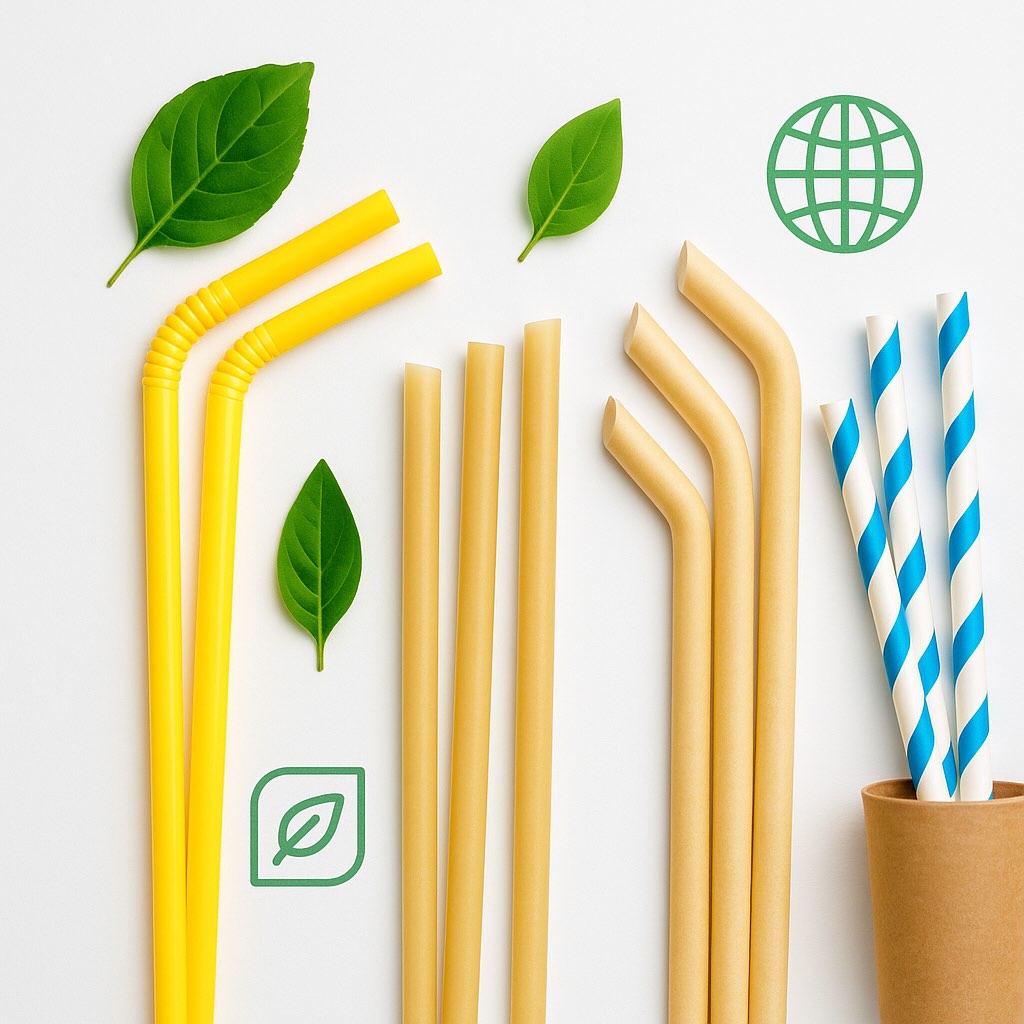
As we become more environmentally aware, people are looking for sustainable replacements for traditional plastics. One of the most common disposable products under fire is the straw. This has led to the introduction of PLA straws as a green alternative. However, are PLA straws better than plastic straws? This detailed comparison of plastic straws vs. PLA straws will help you understand the differences, pros and cons of each so you can make an informed decision.
- What Are Plastic Straws?
- What Are PLA Straws?
- Environmental Impact: Plastic Straws vs. PLA Straws
- Durability and Functionality: Plastic Straws vs. PLA Straws
- Manufacturing: Plastic Straws vs. PLA Straws
- Need a straw production solution?
- Cost Comparison Between Plastic Straws and PLA Straws
- Disposal and Recycling Options
- Health and Safety Concerns
- Availability and Usage in the Market
- The Future of Straws: Plastic vs. PLA
- Concluzie
- Întrebări frecvente
What Are Plastic Straws?
Composition and Manufacturing
Plastic straws are made of polypropylene or polyethylene, which are types of petroleum-based plastics. These materials are inexpensive, durable, and flexible, making plastic straws the go-to for foodservice industries around the world. To manufacture them, the plastic is heated until it melts, then formed into thin tubes and cut to length.
Common Uses of Plastic Straws
Plastic straws have been used in the food and beverage industry for decades. Whether you’re drinking a cold soda at a fast food restaurant or downing a smoothie, plastic straws are everywhere because they’re cheap and convenient.
Environmental Impact of Plastic Straws
Plastic straws have a horrible environmental reputation. They are not biodegradable and can take up to 200 years to break down. Most plastic straws are not recyclable due to their small size, so they produce a massive amount of waste. Additionally, they often end up in the ocean and kill marine life. Straws have become symbolic of the larger plastic pollution problem, resulting in bans or restrictions in many places around the world.
What Are PLA Straws?
Composition and Manufacturing Process
PLA (polylactic acid) straws are made from renewable plant-based resources, such as corn starch, sugarcane, or cassava. The process involves fermenting sugars from these plants to yield lactic acid, which is then polymerized into PLA plastic. Unlike traditional plastic, PLA is considered bio-based because it comes from natural, renewable resources.
Biodegradability of PLA Straws
One of the biggest selling points for PLA straws is that they are compostable, meaning they will break down into natural elements (in theory). However, PLA straws usually need to be taken to an industrial composting facility with high temperatures and controlled conditions to break down. In a regular landfill or the ocean, they may not break down as fast as you think, which is a common misconception people have.
Popularity of PLA Straws in Environmentally-Friendly Circles
Finally, as sustainability has become trendy, PLA straws have gained popularity in environmentally-minded businesses and areas looking to decrease their plastic footprint. Again, the fact they can compost and potential confusion about their environmental impact makes them a more nuanced type of alternative.
Environmental Impact: Plastic Straws vs. PLA Straws
Plastic Straws and Pollution
Plastic straws are one of the most common forms of pollution. Because they are small and lightweight, they often evade waste management systems and end up in the ocean where they harm animals. Turtles, seabirds, and fish commonly ingest plastic straws that they mistake for food and suffer internal injuries or die as a result.
PLA Straws and Composting Problems
Although PLA straws are marketed as biodegradable, as mentioned earlier, they require specific settings to break down—in an industrial composting facility. In natural environments, they behave like traditional plastics and don’t break down quickly. Also, most municipalities don’t have the ability to process PLA straws, so again, many end up in landfills.
Durability and Functionality: Plastic Straws vs. PLA Straws
Strength and Performance with Drinks
Plastic straws are flexible and durable with both cold and hot drinks. They can be used with thick drinks like smoothies or milkshakes without losing their shape. While PLA straws are more environmentally friendly, they tend to be a little more brittle. In very hot drinks, they can soften or warp, which can make them less functional in some cases.
How Long They Last While Being Used
Plastic straws keep their shape while being used, even if left in a drink for hours. PLA straws lose shape more quickly when used in liquids for an extended time, especially hot ones, making them less practical in some situations.
User Experience
In general, plastic straws tend to be smoother and more flexible than PLA straws. PLA straws are more rigid and can feel a little stiffer, which some users may find unpleasant. Many people, however, don’t notice much difference in day-to-day usage.
Manufacturing: Plastic Straws vs. PLA Straws
The manufacturing process of plastic straws and PLA straws is very different because of the unique characteristics of the materials. They both use specialized machines, but with PLA, you have to be much more careful with temperature because it is very sensitive.
Plastic Straw Manufacturing
Plastic straws are typically made from polypropylene (PP), which is a petroleum-based plastic. PP is relatively easy to work with because it’s not very sensitive to temperature changes during the production process. This means the manufacturing equipment used to make plastic straws (a.k.a. PP straw-making machines) can work with a wider range of temperatures. The PP material is melted and extruded into long tubes, which are cut to straw length and packaged for distribution. Because the process is efficient and fast, it’s easy to scale up production of plastic straws at a low cost.
Need a straw production solution?
Don’t wait any longer. Contact us now for a drinking straw production solution, from straw making to final packing!
PLA Straw Manufacturing
On the other hand, PLA (polylactic acid) is a bioplastic made from renewable resources (corn starch, sugarcane, etc.). One of the key challenges in making PLA straws is that PLA is much more sensitive to temperature than polypropylene. Because of this, the production process requires tighter temperature control to ensure the material doesn’t degrade or lose its structural integrity.
To meet those needs, PLA straw-making machines are specially adapted with temperature regulation systems. They control the heating and cooling stages to ensure the PLA extrudes properly into straws without damaging its biodegradable properties. Because more precision is needed to make straws from PLA, it’s generally a more complicated and expensive process than producing plastic straws. Also, if temperature isn’t controlled properly during the production of PLA, you may end up with straws that are brittle or that warp.
Cost Comparison Between Plastic Straws and PLA Straws
Manufacturing Costs
Plastic straws are incredibly cheap to make because petroleum-based plastics are inexpensive, and the process is highly scalable. The process of making PLA straws from plant-based materials is more expensive. Technology is still evolving, and economies of scale haven’t reduced costs as much as they have for plastic straws.
Pricing for Businesses
Plastic straws are still less expensive for businesses to buy, especially in bulk. The cost of PLA straws is usually more expensive, which can be a consideration for high-volume food and beverage businesses such as fast food restaurants and coffee shops.
Consumer Costs
Consumers will see that businesses using PLA straws will charge more for products. Some eco-conscious consumers will pay the extra money, but for others, especially in fast food places, it can be a tough sell.
Disposal and Recycling Options
Plastic Straws Disposal
Plastic straws can’t be recycled because of their size and shape, which makes them hard to sort in recycling facilities. Because of this, they usually end up in landfills or as litter. Their long decomposition time means they are a long-term environmental challenge.
PLA Straws Disposal
Paiele PLA pot fi compostate; totuși, ei trebuie să meargă la o instalație industrială care poate îndeplini condiții specifice pentru ca acest lucru să se întâmple. Compostarea acasă nu le va descompune în mod corespunzător și, în multe cazuri, ajung în fluxuri obișnuite de deșeuri. Deoarece majoritatea instalațiilor municipale de compostare nu pot gestiona PLA, multe paie de PLA ajung în același loc în care fac cele din plastic.
Which Is Easier to Dispose Of?
Nici paiele din plastic sau PLA nu sunt deosebit de ușor de aruncat în mod corespunzător. În timp ce paiele PLA pot fi compostate, lipsa infrastructurii înseamnă că nu puteți profita de acest potențial beneficiu. În cele din urmă, procesul de eliminare este dificil pentru ambele tipuri de paie.
Health and Safety Concerns
Plastic Straws and Potential Health Concerns
Some people are concerned about plastic straws leaching chemicals, such as BPA, when heated. Most plastic straws made today are BPA-free, but they can still be of health concern as they break down.
PLA Straws and Food Safety
PLA straws are generally considered safe for food use because they’re made from plant-based materials. However, they can soften in hot foods, which can lead to potential contamination when the straw deforms.
Availability and Usage in the Market
Where Are Plastic Straws Still Used?
Plastic straws are still widely used in many parts of the world, particularly fast-food restaurants and take-out places, despite increasing numbers of bans and regulations. However, many countries and regions are trying to get rid of them completely.
Where Are PLA Straws Being Used?
PLA straws are becoming more popular in environmentally-friendly places. They can commonly be found in cafes, restaurants, and places that focus on sustainability. More businesses are starting to use them, but they’re still not as common as plastic straws.
Supply Chain Issues for Both
Plastic straws are easy to manufacture and distribute because the supply chain is well-established. PLA straws can have more issues with the supply chain because they’re newer to the market and demand is rising for environmentally-friendly alternatives.
The Future of Straws: Plastic vs. PLA
Long-Term Environmental Impact
Over the next decade, there will be greater pressure to reduce plastic waste. While PLA straws are not a perfect solution, they are a step in the right direction toward more sustainable practices. It’s possible that innovations in biodegradable materials will improve the environmental impact of straw use, but larger systemic changes in waste management and consumption habits will still be needed.
Which Straw Is Better for a Sustainable Future?
When comparing plastic straws to PLA straws, PLA straws are undoubtedly the more environmentally-friendly option in a perfect world. However, due to the challenges of composting and disposal, neither option is without its difficulties. Ultimately, moving toward reusable options or improved composting infrastructure is the best way to reduce straw-related waste in the future.
Concluzie
Atât paiele din plastic, cât și paiele PLA au avantajele și dezavantajele lor. Paiele din plastic sunt mai durabile, mai puțin costisitoare și mai ușor disponibile decât paiele PLA, dar impactul lor asupra mediului este catastrofal. Paiele PLA, deși sunt mai bune pentru planetă în circumstanțe potrivite, au încă probleme cu biodegradabilitatea și costul. Cel mai bun răspuns pentru întreprinderi și consumatori ar putea depinde de cazul individual de utilizare, dar căutarea către paiele reutilizabile și încurajarea unei scăderi a utilizării paielor poate fi în cele din urmă calea cea mai sustenabilă de urmat.
Întrebări frecvente
Paiele PLA sunt biodegradabile?
Paiele PLA sunt biodegradabile, dar numai în instalațiile industriale de compostare, care nu sunt disponibile pe scară largă în majoritatea locurilor.
De ce sunt paiele de plastic dăunătoare mediului?
Paiele de plastic nu se descompun timp de sute de ani și contribuie în mod semnificativ la poluarea oceanelor, care ucide viața sălbatică și dăunează ecosistemelor.
Pot compost paiele PLA acasă?
Nu, nu puteți composta paiele PLA acasă; au nevoie de instalații industriale de compostare cu temperaturi ridicate pentru a se descompune corect.
Cât durează până se descompune paiele de plastic?
Paiele de plastic pot dura până la 200 de ani sau mai mult pentru a se descompune complet. În acest timp, ele se descompun în microplastice mai mici, care persistă în mediu și reprezintă amenințări semnificative pentru fauna sălbatică și ecosisteme.
Sunt paiele PLA mai bune pentru mediu decât paiele din plastic?
Da, paiele PLA sunt teoretic mai bune pentru mediu, deoarece sunt fabricate din resurse regenerabile și pot fi compostate. Cu toate acestea, au nevoie de instalații de compostare industrială pentru a se descompune în mod corespunzător, iar în medii naturale precum gropile de gunoi sau oceane, s-ar putea să nu se degradeze mult mai repede decât paiele de plastic.
Paiele PLA pot fi reciclate?
Paiele PLA nu sunt reciclabile în sistemele tradiționale de reciclare a plasticului. Sunt compostabile în instalațiile de compostare industrială, dar nu pot fi procesate prin programe convenționale de reciclare, deoarece necesită o manipulare diferită față de materialele plastice pe bază de petrol.
Ce se întâmplă dacă paiele PLA ajung în ocean?
Dacă paiele PLA ajung în ocean, ele nu se descompun la fel de repede ca într-o instalație industrială de compostare. Similar cu plasticul, ele pot persista mult timp în mediile marine, iar impactul lor asupra vieții marine este încă în studiu.
De ce sunt încă utilizate pe scară largă paiele de plastic dacă sunt atât de dăunătoare pentru mediu?
Paiele din plastic sunt încă utilizate pe scară largă deoarece sunt ieftine, ușor de fabricat și oferă o durabilitate constantă atât în băuturile calde, cât și în cele reci. În ciuda impactului lor asupra mediului, comoditatea și rentabilitatea paielor din plastic au făcut dificilă eliminarea lor în multe industrii, deși interdicțiile și restricțiile devin din ce în ce mai frecvente.