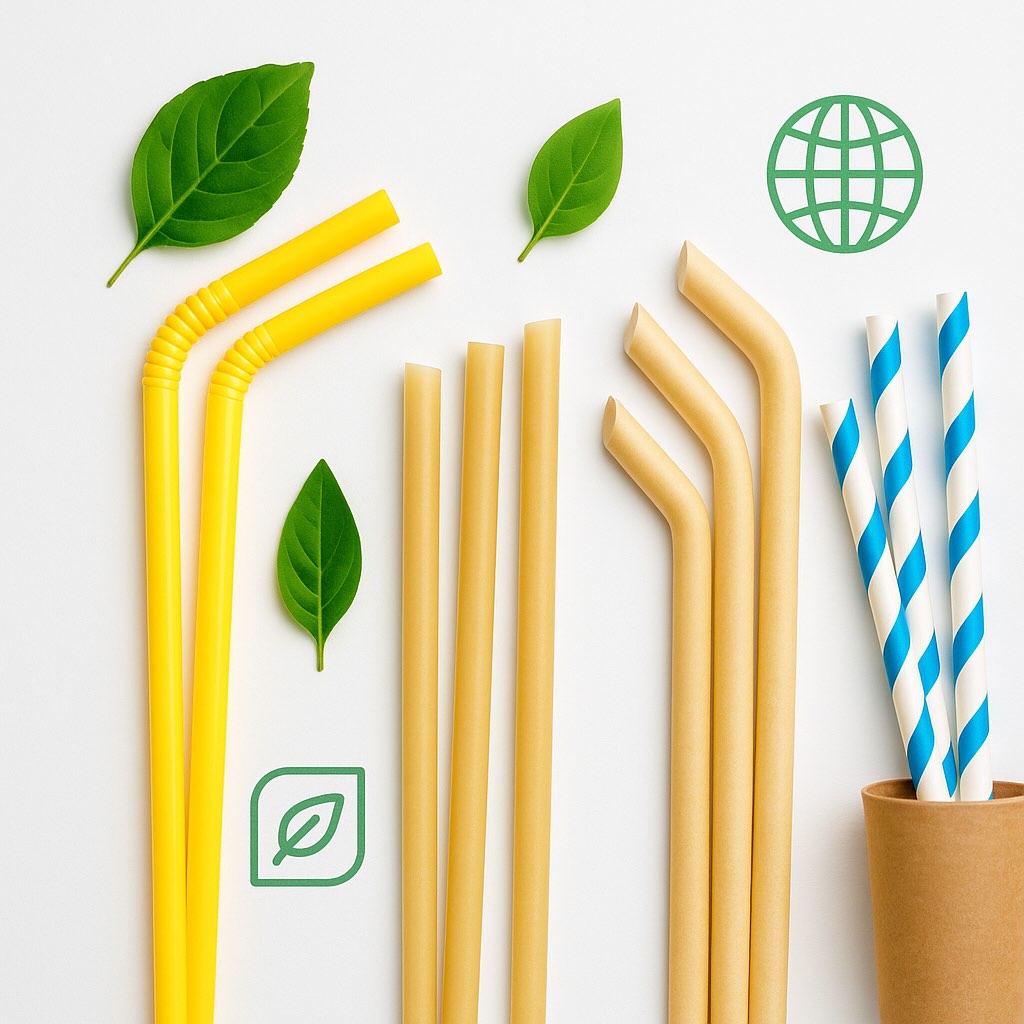
As we become more environmentally aware, people are looking for sustainable replacements for traditional plastics. One of the most common disposable products under fire is the straw. This has led to the introduction of PLA straws as a green alternative. However, are PLA straws better than plastic straws? This detailed comparison of plastic straws vs. PLA straws will help you understand the differences, pros and cons of each so you can make an informed decision.
- What Are Plastic Straws?
- Τι είναι τα καλαμάκια PLA;
- Environmental Impact: Plastic Straws vs. PLA Straws
- Durability and Functionality: Plastic Straws vs. PLA Straws
- Manufacturing: Plastic Straws vs. PLA Straws
- Need a straw production solution?
- Cost Comparison Between Plastic Straws and PLA Straws
- Disposal and Recycling Options
- Health and Safety Concerns
- Availability and Usage in the Market
- The Future of Straws: Plastic vs. PLA
- Σύναψη
- Συχνές ερωτήσεις
What Are Plastic Straws?
Composition and Manufacturing
Plastic straws are made of polypropylene or polyethylene, which are types of petroleum-based plastics. These materials are inexpensive, durable, and flexible, making plastic straws the go-to for foodservice industries around the world. To manufacture them, the plastic is heated until it melts, then formed into thin tubes and cut to length.
Common Uses of Plastic Straws
Plastic straws have been used in the food and beverage industry for decades. Whether you’re drinking a cold soda at a fast food restaurant or downing a smoothie, plastic straws are everywhere because they’re cheap and convenient.
Environmental Impact of Plastic Straws
Plastic straws have a horrible environmental reputation. They are not biodegradable and can take up to 200 years to break down. Most plastic straws are not recyclable due to their small size, so they produce a massive amount of waste. Additionally, they often end up in the ocean and kill marine life. Straws have become symbolic of the larger plastic pollution problem, resulting in bans or restrictions in many places around the world.
Τι είναι τα καλαμάκια PLA;
Composition and Manufacturing Process
PLA (polylactic acid) straws are made from renewable plant-based resources, such as corn starch, sugarcane, or cassava. The process involves fermenting sugars from these plants to yield lactic acid, which is then polymerized into PLA plastic. Unlike traditional plastic, PLA is considered bio-based because it comes from natural, renewable resources.
Biodegradability of PLA Straws
One of the biggest selling points for PLA straws is that they are compostable, meaning they will break down into natural elements (in theory). However, PLA straws usually need to be taken to an industrial composting facility with high temperatures and controlled conditions to break down. In a regular landfill or the ocean, they may not break down as fast as you think, which is a common misconception people have.
Popularity of PLA Straws in Environmentally-Friendly Circles
Finally, as sustainability has become trendy, PLA straws have gained popularity in environmentally-minded businesses and areas looking to decrease their plastic footprint. Again, the fact they can compost and potential confusion about their environmental impact makes them a more nuanced type of alternative.
Environmental Impact: Plastic Straws vs. PLA Straws
Plastic Straws and Pollution
Plastic straws are one of the most common forms of pollution. Because they are small and lightweight, they often evade waste management systems and end up in the ocean where they harm animals. Turtles, seabirds, and fish commonly ingest plastic straws that they mistake for food and suffer internal injuries or die as a result.
PLA Straws and Composting Problems
Although PLA straws are marketed as biodegradable, as mentioned earlier, they require specific settings to break down—in an industrial composting facility. In natural environments, they behave like traditional plastics and don’t break down quickly. Also, most municipalities don’t have the ability to process PLA straws, so again, many end up in landfills.
Durability and Functionality: Plastic Straws vs. PLA Straws
Strength and Performance with Drinks
Plastic straws are flexible and durable with both cold and hot drinks. They can be used with thick drinks like smoothies or milkshakes without losing their shape. While PLA straws are more environmentally friendly, they tend to be a little more brittle. In very hot drinks, they can soften or warp, which can make them less functional in some cases.
How Long They Last While Being Used
Plastic straws keep their shape while being used, even if left in a drink for hours. PLA straws lose shape more quickly when used in liquids for an extended time, especially hot ones, making them less practical in some situations.
User Experience
In general, plastic straws tend to be smoother and more flexible than PLA straws. PLA straws are more rigid and can feel a little stiffer, which some users may find unpleasant. Many people, however, don’t notice much difference in day-to-day usage.
Manufacturing: Plastic Straws vs. PLA Straws
The manufacturing process of plastic straws and PLA straws is very different because of the unique characteristics of the materials. They both use specialized machines, but with PLA, you have to be much more careful with temperature because it is very sensitive.
Plastic Straw Manufacturing
Plastic straws are typically made from polypropylene (PP), which is a petroleum-based plastic. PP is relatively easy to work with because it’s not very sensitive to temperature changes during the production process. This means the manufacturing equipment used to make plastic straws (a.k.a. PP straw-making machines) can work with a wider range of temperatures. The PP material is melted and extruded into long tubes, which are cut to straw length and packaged for distribution. Because the process is efficient and fast, it’s easy to scale up production of plastic straws at a low cost.
Need a straw production solution?
Don’t wait any longer. Contact us now for a drinking straw production solution, from straw making to final packing!
PLA Straw Manufacturing
On the other hand, PLA (polylactic acid) is a bioplastic made from renewable resources (corn starch, sugarcane, etc.). One of the key challenges in making PLA straws is that PLA is much more sensitive to temperature than polypropylene. Because of this, the production process requires tighter temperature control to ensure the material doesn’t degrade or lose its structural integrity.
To meet those needs, PLA straw-making machines are specially adapted with temperature regulation systems. They control the heating and cooling stages to ensure the PLA extrudes properly into straws without damaging its biodegradable properties. Because more precision is needed to make straws from PLA, it’s generally a more complicated and expensive process than producing plastic straws. Also, if temperature isn’t controlled properly during the production of PLA, you may end up with straws that are brittle or that warp.
Cost Comparison Between Plastic Straws and PLA Straws
Manufacturing Costs
Plastic straws are incredibly cheap to make because petroleum-based plastics are inexpensive, and the process is highly scalable. The process of making PLA straws from plant-based materials is more expensive. Technology is still evolving, and economies of scale haven’t reduced costs as much as they have for plastic straws.
Pricing for Businesses
Plastic straws are still less expensive for businesses to buy, especially in bulk. The cost of PLA straws is usually more expensive, which can be a consideration for high-volume food and beverage businesses such as fast food restaurants and coffee shops.
Consumer Costs
Consumers will see that businesses using PLA straws will charge more for products. Some eco-conscious consumers will pay the extra money, but for others, especially in fast food places, it can be a tough sell.
Disposal and Recycling Options
Plastic Straws Disposal
Plastic straws can’t be recycled because of their size and shape, which makes them hard to sort in recycling facilities. Because of this, they usually end up in landfills or as litter. Their long decomposition time means they are a long-term environmental challenge.
PLA Straws Disposal
PLA straws can be composted; however, they have to go to an industrial facility that can meet specific conditions for that to happen. Home composting won’t break them down properly, and in many cases, they end up in regular waste streams. Because most municipal composting facilities can’t handle PLA, many PLA straws end up in the same place plastic ones do.
Which Is Easier to Dispose Of?
Neither plastic nor PLA straws are particularly easy to dispose of properly. While PLA straws can be composted, the lack of infrastructure means you can’t take advantage of that potential benefit. Ultimately, the disposal process is difficult for both types of straws.
Health and Safety Concerns
Plastic Straws and Potential Health Concerns
Some people are concerned about plastic straws leaching chemicals, such as BPA, when heated. Most plastic straws made today are BPA-free, but they can still be of health concern as they break down.
PLA Straws and Food Safety
PLA straws are generally considered safe for food use because they’re made from plant-based materials. However, they can soften in hot foods, which can lead to potential contamination when the straw deforms.
Availability and Usage in the Market
Where Are Plastic Straws Still Used?
Plastic straws are still widely used in many parts of the world, particularly fast-food restaurants and take-out places, despite increasing numbers of bans and regulations. However, many countries and regions are trying to get rid of them completely.
Where Are PLA Straws Being Used?
Τα καλαμάκια PLA γίνονται πιο δημοφιλή σε φιλικά προς το περιβάλλον μέρη. Μπορούν να βρεθούν συνήθως σε καφετέριες, εστιατόρια και μέρη που εστιάζουν στη βιωσιμότητα. Περισσότερες επιχειρήσεις αρχίζουν να τα χρησιμοποιούν, αλλά εξακολουθούν να μην είναι τόσο κοινά όσο τα πλαστικά καλαμάκια.
Supply Chain Issues for Both
Τα πλαστικά καλαμάκια είναι εύκολο να κατασκευαστούν και να διανεμηθούν επειδή η αλυσίδα εφοδιασμού είναι καλά εδραιωμένη. Τα καλαμάκια PLA μπορεί να έχουν περισσότερα προβλήματα με την αλυσίδα εφοδιασμού επειδή είναι νεότερα στην αγορά και η ζήτηση αυξάνεται για φιλικές προς το περιβάλλον εναλλακτικές λύσεις.
The Future of Straws: Plastic vs. PLA
Long-Term Environmental Impact
Over the next decade, there will be greater pressure to reduce plastic waste. While PLA straws are not a perfect solution, they are a step in the right direction toward more sustainable practices. It’s possible that innovations in biodegradable materials will improve the environmental impact of straw use, but larger systemic changes in waste management and consumption habits will still be needed.
Which Straw Is Better for a Sustainable Future?
When comparing plastic straws to PLA straws, PLA straws are undoubtedly the more environmentally-friendly option in a perfect world. However, due to the challenges of composting and disposal, neither option is without its difficulties. Ultimately, moving toward reusable options or improved composting infrastructure is the best way to reduce straw-related waste in the future.
Σύναψη
Τόσο τα πλαστικά καλαμάκια όσο και τα καλαμάκια PLA έχουν τα θετικά και τα αρνητικά τους. Τα πλαστικά καλαμάκια είναι πιο ανθεκτικά, λιγότερο ακριβά και πιο εύκολα διαθέσιμα από τα καλαμάκια PLA, αλλά οι περιβαλλοντικές τους επιπτώσεις είναι καταστροφικές. Τα καλαμάκια PLA, αν και καλύτερα για τον πλανήτη υπό τις κατάλληλες συνθήκες, εξακολουθούν να έχουν προβλήματα με τη βιοδιασπασιμότητα και το κόστος. Η καλύτερη απάντηση για τις επιχειρήσεις και τους καταναλωτές μπορεί να εξαρτάται από την περίπτωση της μεμονωμένης χρήσης, αλλά η αναζήτηση σε επαναχρησιμοποιήσιμα καλαμάκια και η ενθάρρυνση της μείωσης της χρήσης καλαμιών μπορεί τελικά να είναι η πιο βιώσιμη πορεία προς τα εμπρός.
Συχνές ερωτήσεις
Είναι τα καλαμάκια PLA βιοδιασπώμενα;
Τα καλαμάκια PLA είναι βιοδιασπώμενα, αλλά μόνο σε βιομηχανικές εγκαταστάσεις κομποστοποίησης, οι οποίες δεν είναι ευρέως διαθέσιμες στα περισσότερα μέρη.
Γιατί τα πλαστικά καλαμάκια είναι επιβλαβή για το περιβάλλον;
Τα πλαστικά καλαμάκια δεν αποσυντίθενται για εκατοντάδες χρόνια και συμβάλλουν σημαντικά στη ρύπανση του ωκεανού, η οποία σκοτώνει την άγρια ζωή και βλάπτει τα οικοσυστήματα.
Μπορώ να κομποστοποιήσω καλαμάκια PLA στο σπίτι;
Όχι, δεν μπορείτε να κομποστοποιήσετε καλαμάκια PLA στο σπίτι. απαιτούν βιομηχανικές εγκαταστάσεις κομποστοποίησης με υψηλές θερμοκρασίες για να διασπαστούν σωστά.
Πόσος χρόνος χρειάζεται για να αποσυντεθούν τα πλαστικά καλαμάκια;
Τα πλαστικά καλαμάκια μπορεί να χρειαστούν έως και 200 χρόνια ή περισσότερα για να αποσυντεθούν πλήρως. Κατά τη διάρκεια αυτής της περιόδου, διασπώνται σε μικρότερα μικροπλαστικά, τα οποία παραμένουν στο περιβάλλον και αποτελούν σημαντικές απειλές για την άγρια ζωή και τα οικοσυστήματα.
Είναι τα καλαμάκια PLA καλύτερα για το περιβάλλον από τα πλαστικά καλαμάκια;
Ναι, τα καλαμάκια PLA θεωρητικά είναι καλύτερα για το περιβάλλον επειδή είναι κατασκευασμένα από ανανεώσιμες πηγές και μπορούν να κομποστοποιηθούν. Ωστόσο, απαιτούν εγκαταστάσεις βιομηχανικής κομποστοποίησης για να διασπαστούν σωστά και σε φυσικά περιβάλλοντα όπως οι χωματερές ή οι ωκεανοί, ενδέχεται να μην αποικοδομούνται πολύ πιο γρήγορα από τα πλαστικά καλαμάκια.
Μπορούν τα καλαμάκια PLA να ανακυκλωθούν;
Τα καλαμάκια PLA δεν είναι ανακυκλώσιμα στα παραδοσιακά συστήματα ανακύκλωσης πλαστικών. Είναι κομποστοποιήσιμα σε βιομηχανικές εγκαταστάσεις κομποστοποίησης, αλλά δεν μπορούν να υποστούν επεξεργασία μέσω συμβατικών προγραμμάτων ανακύκλωσης γιατί απαιτούν διαφορετικό χειρισμό από τα πλαστικά με βάση το πετρέλαιο.
Τι θα συμβεί αν τα καλαμάκια PLA καταλήξουν στον ωκεανό;
Εάν τα καλαμάκια PLA καταλήξουν στον ωκεανό, δεν διασπώνται τόσο γρήγορα όσο θα συνέβαιναν σε μια βιομηχανική εγκατάσταση κομποστοποίησης. Παρόμοια με τα πλαστικά, μπορούν να επιμείνουν για μεγάλο χρονικό διάστημα σε θαλάσσια περιβάλλοντα και η επίδρασή τους στη θαλάσσια ζωή είναι ακόμα υπό μελέτη.
Γιατί τα πλαστικά καλαμάκια εξακολουθούν να χρησιμοποιούνται ευρέως αν είναι τόσο επιβλαβή για το περιβάλλον;
Τα πλαστικά καλαμάκια εξακολουθούν να χρησιμοποιούνται ευρέως επειδή είναι φθηνά, εύκολα στην κατασκευή και προσφέρουν σταθερή αντοχή τόσο σε ζεστά όσο και σε κρύα ροφήματα. Παρά τις περιβαλλοντικές επιπτώσεις τους, η ευκολία και η σχέση κόστους-αποτελεσματικότητας των πλαστικών καλαμιών έχουν καταστήσει δύσκολη τη σταδιακή κατάργησή τους σε πολλές βιομηχανίες, αν και οι απαγορεύσεις και οι περιορισμοί γίνονται όλο και πιο συνηθισμένοι.